Washington, DC packs more world-class history, art, and architecture into 68 square miles than almost any city on earth—and most of it is free. Whether you have one afternoon or a full week, the real challenge isn’t finding things to do in Washington DC. It’s narrowing them down.
This 2026 guide is written by local guides who walk the National Mall every day. Below you’ll find the 25 best things to do in Washington DC, organized by category, with insider tips on timing, costs, and how to see the most without burning out. We’ve also included the best guided tours, free attractions, kid-friendly picks, and seasonal highlights like the cherry blossoms and Independence Day.
Quick answer: The top things to do in Washington DC are visiting the Lincoln Memorial and Washington Monument on the National Mall, exploring free Smithsonian museums (especially Air and Space and the National Museum of African American History and Culture), walking through historic Georgetown, taking a guided monuments tour at sunset, and timing a spring trip with the National Cherry Blossom Festival.
Iconic Monuments & Memorials You Can’t Miss
The 2-mile-long National Mall is the heart of the capital, and these five monuments are the non-negotiables for any Washington DC trip.
1. Lincoln Memorial
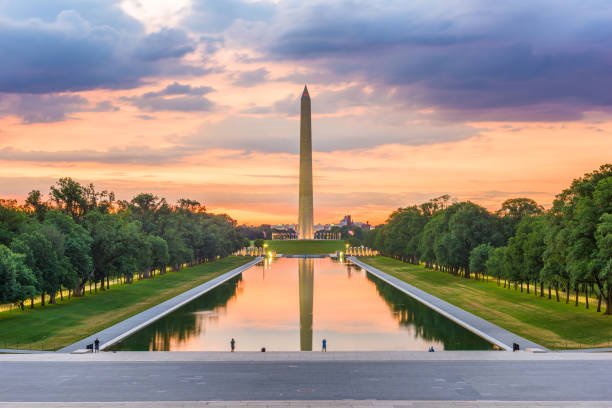
Standing at the western end of the Mall, the Lincoln Memorial is the city’s most photographed monument—and for good reason. The 19-foot marble statue of Abraham Lincoln is even more imposing in person, and the views back across the Reflecting Pool to the Washington Monument are postcard-perfect at sunrise and sunset. Open 24/7, free admission. Visit after dark for a quieter, almost spiritual atmosphere.
2. Washington Monument
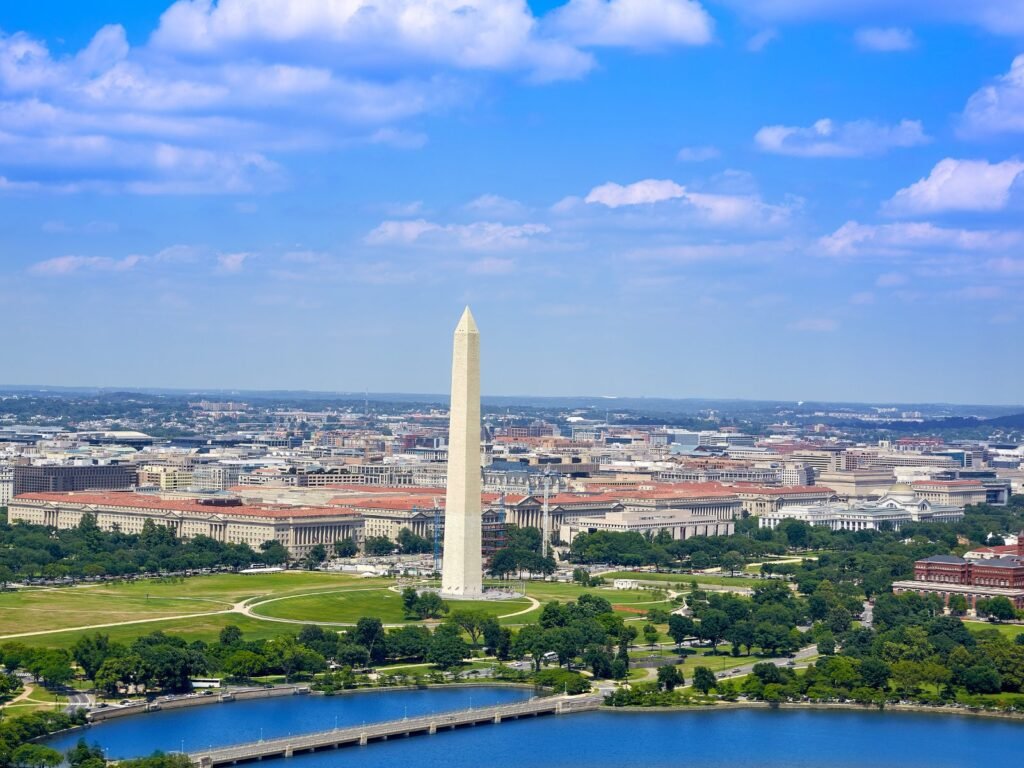
At 555 feet, the Washington Monument is the tallest structure in the city and the world’s tallest stone obelisk. The view from the observation deck is the only spot where you can see the entire Mall, the White House, and the U.S. Capitol in a single glance. Free tickets are released daily at 10 AM ET, but they sell out fast—if you want guaranteed entry, reserve a Washington Monument top-view ticket in advance and skip the line.
3. Martin Luther King Jr. Memorial
Dedicated in 2011, the MLK Memorial is one of the most powerful additions to the Mall in decades. The 30-foot “Stone of Hope” sculpture and the inscribed quotations along the surrounding wall give visitors space for reflection that few other DC sites offer. It’s especially moving at night when the granite glows under uplighting.
4. World War II Memorial
Located between the Washington Monument and the Lincoln Memorial, the WWII Memorial honors the 16 million Americans who served in the war. The Freedom Wall, with its 4,048 gold stars (each representing 100 Americans who died), is an essential moment of pause—particularly for visitors with veterans in the family.
5. Vietnam Veterans Memorial
Maya Lin’s stark black granite wall, etched with more than 58,000 names, remains one of the most emotionally affecting memorials in the world. Bring a piece of paper and a pencil if you want to do a name rubbing—it’s a personal tradition many families practice.
Pro tip: The major Mall monuments cover roughly 2 miles end to end. Walking them all in summer humidity is brutal. A small-group DC monuments minibus tour or open-air e-cart tour lets you cover everything in 2 hours with photo stops and zero foot pain.
World-Class Museums (Most Are Free!)
DC is home to 21 Smithsonian museums—nearly all of them free—plus a handful of paid museums that are absolutely worth the ticket. Here are the museum experiences you should prioritize.
6. National Air and Space Museum
The most-visited museum in the Smithsonian system, and an easy “wow” for kids and adults. Touch a moon rock, see the original Wright Flyer, and stand under Apollo 11’s command module. The renovated west wing reopened with new immersive galleries, and the IMAX theater alone is worth the visit. Free entry, timed-entry passes recommended in peak season.
7. National Museum of African American History and Culture (NMAAHC)
Often called the most powerful museum in DC, NMAAHC traces 400 years of Black American experience across five floors. Plan at least 3 hours—4 if you can. Free, but timed-entry passes are required and disappear fast, so book on the official site 30 days in advance.
8. National Museum of Natural History
Home to the Hope Diamond, a 45-foot-long T. rex skeleton, and the spectacular Ocean Hall. Excellent for families and rainy days. Free admission, no timed entry needed.
9. National Gallery of Art
Two buildings of art spanning 800 years, including the only Leonardo da Vinci painting in the Americas. The sculpture garden is a beautiful free space to picnic in spring and fall, and the West Building’s rotunda is one of the most overlooked photo spots in the city.
10. Museum of the Bible
A privately funded, six-floor museum near the Mall that uses immersive technology to bring the Bible’s history and global cultural impact to life. Even non-religious visitors are usually surprised by how engaging the exhibits are. Book Museum of the Bible admission tickets here to skip the ticket counter.
11. United States Holocaust Memorial Museum
Sobering, important, and unforgettable. Free admission, but timed passes are required from March through August. Allow at least 2–3 hours.
Insider tip: Smithsonian museums all sit along the National Mall, so you can hop between two or three in a single afternoon. Don’t try to do more than that—DC museums are deep, and museum fatigue is real.
Best Guided Tours in Washington DC
If you have limited time or want context that a self-guided walk simply can’t provide, a guided tour is the single best investment in your DC trip. These are the formats locals actually recommend to first-time visitors.
12. Day or Night Monuments Tour by E-Cart
The most popular tour in our lineup. Open-air electric carts cover all the major Mall monuments in 2 hours, with a licensed local guide narrating the stories behind each site. Family-friendly, photo-friendly, and especially magical during cherry blossom season. See the e-cart day & night tour.
13. Moonlight E-Cart Tour
DC’s monuments at night are a completely different experience—quieter crowds, dramatic uplighting, and cooler temperatures in summer. The Moonlight E-Cart Tour is consistently our highest-rated experience for couples and photographers.
14. Open-Air Minibus Monuments Tour
If you’d rather have a roof and 360° views, our open-air minibus tour covers the same monuments in 2 hours with live narration. Better for variable weather or larger groups.
15. Capitol Hill & Library of Congress Walking Tour
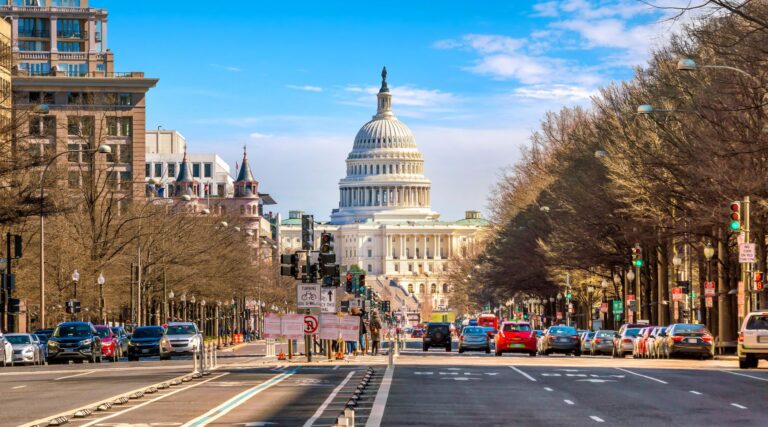
The U.S. Capitol and the Library of Congress (the largest library in the world, with 173+ million items) are two of DC’s most jaw-dropping interiors—and they’re a hassle to coordinate on your own. Our Capitol Hill & Library of Congress walking tour bundles entrance tickets, a docent-led Capitol visit, and 3 hours of expert storytelling. See our full breakdown of the 5 must-see highlights of these tours.
16. Lincoln Assassination Walking Tour
For history buffs, this is one of the most compelling 2 hours in DC. You’ll trace John Wilkes Booth’s exact route on the night of April 14, 1865, ending at Ford’s Theatre. Reserve the Lincoln Assassination tour here.
17. Historic Georgetown Walking Tour
Georgetown predates the founding of Washington itself. Our Historic Georgetown Walking Tour covers the C&O Canal, cobblestone streets, Federal-era homes, and stories of the founders, immigrants, and notable figures who shaped the neighborhood.
18. Monuments Sightseeing Cruise
Seeing the Lincoln, Jefferson, and Washington memorials from the Potomac River is a dramatically different perspective—and a lifesaver on hot days. The Monuments Sightseeing Cruise is a 2-hour relaxed option that pairs perfectly with a museum-heavy itinerary.
Historic Neighborhoods Worth Exploring
19. Georgetown
Cobblestone streets, riverfront dining, the C&O Canal towpath, and some of the city’s best shopping along M Street and Wisconsin Avenue. Our complete Georgetown guide breaks down what to see, where to eat, and the spring 2026 events worth planning around.
20. Capitol Hill
Beyond the Capitol building itself, the neighborhood is full of historic row houses, the bustling Eastern Market (open weekends), and Barracks Row’s restaurants. Our Capitol Hill walking guide maps out a great half-day itinerary.
21. Dupont Circle & Embassy Row
Dupont is one of DC’s most cosmopolitan neighborhoods, with bookstores, sidewalk cafés, and Embassy Row’s grand mansions stretching up Massachusetts Avenue. During Passport DC 2026 in May, more than 50 embassies open their doors to the public for free—an experience you can’t get anywhere else in America. See our full Dupont Circle guide for restaurant picks and walking routes.
22. The Wharf
The Wharf is DC’s redeveloped waterfront district along the Southwest Channel: live music venues, rooftop bars, the historic Maine Avenue Fish Market (the oldest continuously operating fish market in the U.S.), and a beautiful boardwalk. See our Wharf neighborhood guide for the full lineup.
Outdoor & Off-the-Beaten-Path Picks
23. Tidal Basin & Cherry Blossoms
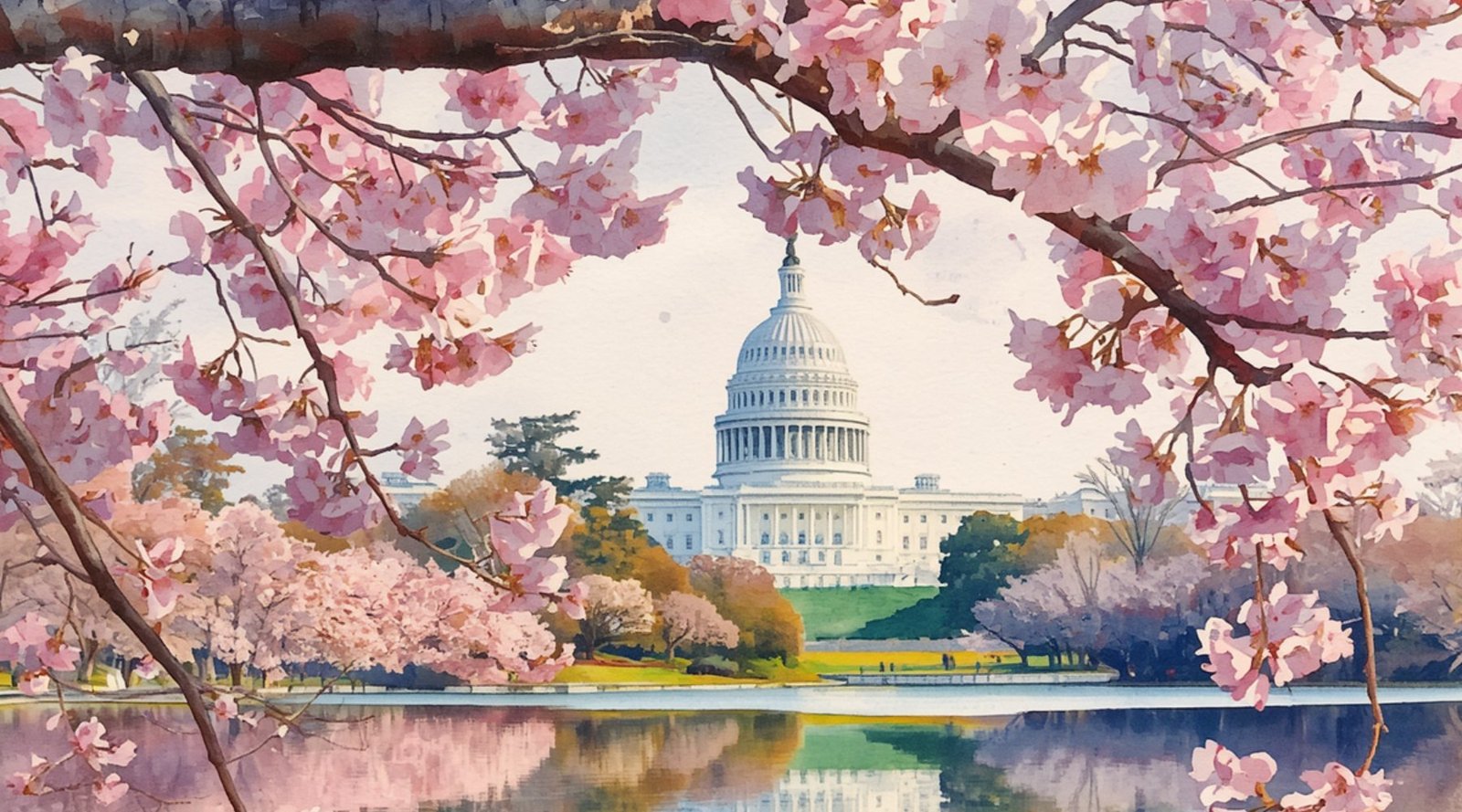
In late March and early April, the Tidal Basin transforms into a 3-mile loop of pink-and-white blossoms framing the Jefferson Memorial. Peak bloom typically lasts only 4–7 days, so timing matters—check our Cherry Blossom Tour DC complete 2026 guide and our Sakura Matsuri Festival post for events and the best viewing strategies.
24. Rock Creek Park
A 1,754-acre forested park running through the middle of the city—double the size of Central Park. Perfect for hiking, picnics, and escaping summer heat. Don’t miss the Peirce Mill and the often-overlooked Rock Creek Park Nature Center.
25. United States Botanic Garden
Tucked next to the Capitol, the Botanic Garden is one of DC’s best-kept secrets. The conservatory’s tropical jungle and seasonal exhibits are free, indoor, and a perfect 45-minute reset on a long sightseeing day.
Free Things to Do in Washington DC
DC has more free attractions than any major U.S. city. Highlights you can enjoy without spending a dollar:
- All Smithsonian museums (11+ on the Mall alone)
- All National Mall monuments and memorials
- The U.S. Capitol (free guided tour with reservation)
- The Library of Congress
- The National Gallery of Art and Sculpture Garden
- The National Zoo (free, home to giant pandas through 2026 events)
- The U.S. Botanic Garden
- The Kennedy Center’s free Millennium Stage performances (daily at 6 PM)
- The Bureau of Engraving and Printing tour (watch real money being printed)
You can easily spend a 4-day DC trip seeing major attractions and spend almost nothing on entry fees—budget instead for transportation, food, and one or two paid experiences.
Best Things to Do in Washington DC at Night
The capital looks completely different after dark, and night sightseeing is one of the most underrated things to do in Washington DC:
- See the monuments under uplighting (the Lincoln Memorial at night is unforgettable)
- Take a Moonlight E-Cart Tour for cooler temps and dramatic photos
- Catch a Kennedy Center performance
- Enjoy rooftop bars in the Wharf and Adams Morgan
- Walk the U Street corridor for live jazz at iconic spots like Ben’s Chili Bowl and U Street Music Hall
Seasonal Highlights & Events
DC rewards visitors who time their trips around its biggest events:
- March–April: National Cherry Blossom Festival – the city’s signature event
- May: Passport DC – free embassy open houses across the city
- May 25, 2026: National Memorial Day Parade – one of America’s largest patriotic gatherings (full guide here)
- July 4th: Independence Day on the National Mall – fireworks over the Washington Monument (Fourth of July guide)
- September–October: Fall foliage along the Tidal Basin and Rock Creek
- December: Holiday markets, ZooLights, and the National Christmas Tree
Practical Tips for Visiting Washington DC
A few things every first-time visitor should know:
- Getting around: The Metro is clean, safe, and connects all major neighborhoods. Buy a SmarTrip card or use contactless tap-to-pay.
- Best time to visit: April (cherry blossoms) and September–October (mild weather, fewer crowds) are ideal. Avoid late July through August unless you handle humidity well.
- How long to stay: 3 days is the minimum for the highlights; 5 days is ideal if you want to include museums, neighborhoods, and tours.
- Booking ahead: Free timed-entry passes for the Washington Monument, NMAAHC, and the Holocaust Museum vanish fast in peak season—book 30 days out.
- Where to start: A guided tour on day one gives you the geography and context that makes everything else click. Read more about why a short DC guided tour is the smartest first move.
Frequently Asked Questions
Plan Your Washington DC Trip With a Local Guide
There’s no shortage of things to do in Washington DC—the challenge is making the most of the time you have. Walking the Mall on your own is meaningful, but hearing the stories behind each monument from a licensed local guide turns a sightseeing day into a trip you’ll remember for years.
Our Washington DC guided tours are built for travelers who want context, comfort, and unforgettable photo stops without the logistics. Whether you have 2 hours or 5 days, we’ll help you see the best of the capital.
Ready to explore? Browse all DC tours or contact us to design a private experience for your group.