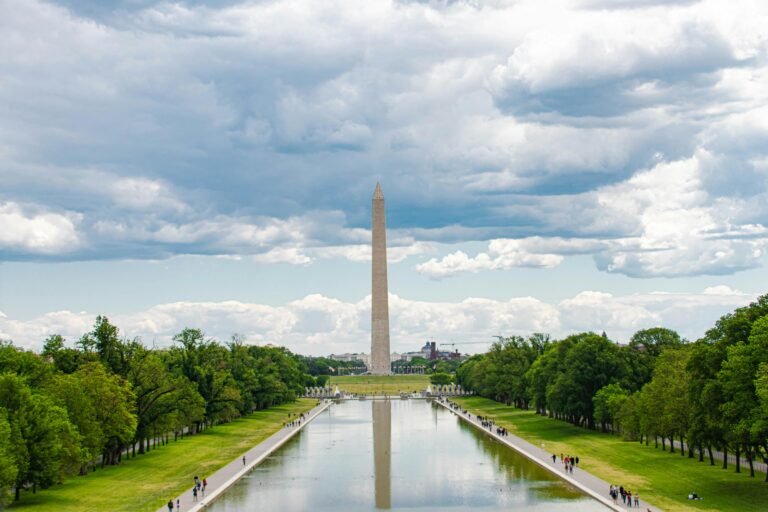
Autumn brings a different kind of beauty to Washington DC. As temperatures cool, Washington DC fall foliage transforms the city’s trees from summer green to vivid shades of red, orange, yellow, and bronze. Historic monuments, quiet neighborhoods, parks, and waterfront paths all take on a colorful seasonal backdrop, making fall an ideal time to explore the city.
From scenic parks to iconic landmarks, Washington DC fall foliage offers plenty of opportunities to enjoy the changing colors while discovering the capital’s historic streets and outdoor spaces.
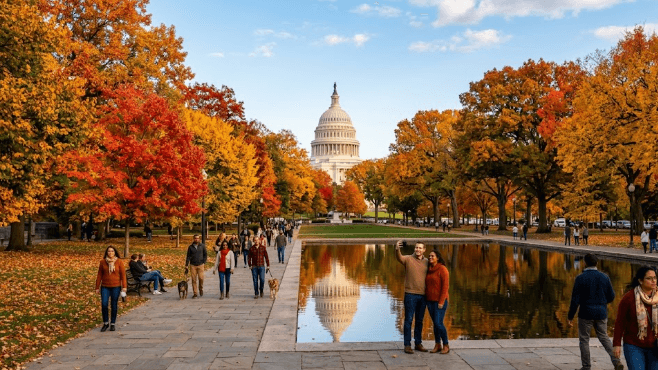
If you are planning a fall trip to the nation’s capital, you do not have to travel far outside the city to enjoy spectacular autumn scenery. From the National Mall to the wooded trails of Rock Creek Park, there are plenty of places to experience Washington DC fall foliage.
The National Park Service notes that different tree species change at different times, meaning fall color develops gradually throughout the season rather than arriving everywhere at once. This gradual change makes Washington DC fall foliage especially interesting to explore, as different parts of the city can offer new colors throughout the season.
Here is your guide to some of the best places to see autumn colors in Washington, DC, along with tips for planning your visit for the Washington DC fall foliage.
When Is the Best Time to See Fall Foliage in Washington DC?
Washington DC fall foliage timing varies from year to year because temperatures, rainfall, and other weather conditions influence when trees change color.
In general, October and early November are good periods to plan a fall foliage trip to Washington, DC, but there is no single guaranteed peak date for the entire city. Different tree species change at different times, and foliage can vary from one neighborhood or park to another.
For 2026, the National Park Service’s Greater Capital Region specifically highlights autumn opportunities across Rock Creek Park, the National Mall, Theodore Roosevelt Island, Great Falls, Anacostia Park, and other regional parks.
Tip: If your main goal is fall foliage photography, give yourself some flexibility rather than planning around one exact day. A combination of parks, waterfronts, and historic neighborhoods can give you a better chance of finding colorful trees during your visit.
1. National Mall: Fall Colors With Iconic Monuments
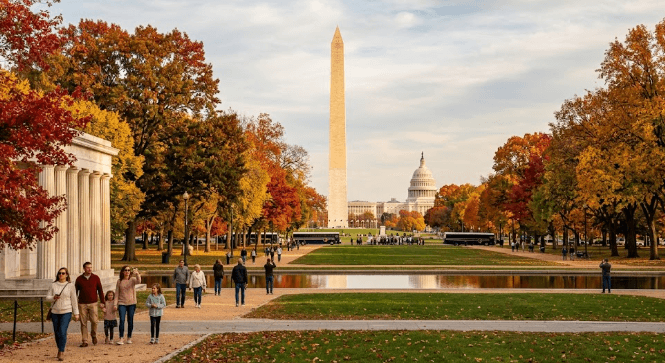
The National Mall is one of the most recognizable places in Washington, DC, and fall adds another layer to its scenery. Washington DC fall foliage provides a colorful backdrop to the city’s most iconic monuments and open spaces.
Imagine walking past the Washington Monument with golden trees in the background or photographing the Lincoln Memorial surrounded by changing foliage. The combination of historic monuments, open lawns, mature trees, and autumn colors creates classic Washington photographs.
Destination DC specifically highlights the National Mall as one of the city’s notable fall foliage locations.
What to see
- Washington Monument
- Lincoln Memorial
- World War II Memorial
- Korean War Veterans Memorial
- Vietnam Veterans Memorial
- Tidal Basin
- West Potomac Park
For photographers, early morning can provide softer light and fewer visitors.
2026 visitor note: The National Park Service currently has temporary restrictions affecting portions of the Lincoln Memorial Reflecting Pool area through October 20, 2026, due to ongoing work. Check current NPS conditions before your visit.
2. Rock Creek Park: A Forest Escape in the City
If you want a more natural fall experience, Rock Creek Park should be near the top of your itinerary.
Located in Northwest Washington, DC, Rock Creek Park provides a dramatic contrast to the city’s monumental core. Its wooded trails, streams, bridges, and historic sites create countless opportunities to experience Washington DC fall foliage surrounded by a more natural setting.
The National Park Service describes the park as a natural oasis in the nation’s capital, with more than 30 miles of hiking trails within its main boundary.
Destination DC also recommends Rock Creek Park as one of Washington’s premier places for experiencing fall foliage.
Why visit in fall?
The park’s hardwood forests can create a canopy of changing leaves overhead, while fallen leaves add color to trails and creekside scenery.
Bring comfortable walking shoes and allow extra time. Rock Creek Park is much larger than it may appear on a city map, so you do not need to see everything in one visit.
3. U.S. National Arboretum: Colorful Trees and the Capitol Columns
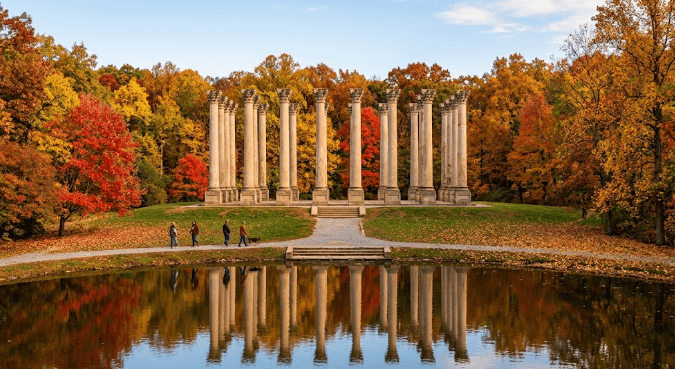
For visitors who want both beautiful landscapes and distinctive photography, the U.S. National Arboretum is an excellent fall destination.
Located in Northeast DC, the Arboretum covers hundreds of acres and features plant collections, gardens, trails, and the famous National Capitol Columns.
The Arboretum is particularly interesting in autumn because its botanical collections offer a variety of textures and colors. It’s a wonderful place to enjoy Washington DC fall foliage, with the Capitol Columns providing an especially distinctive backdrop for fall photographs.
Don’t miss
- National Capitol Columns
- Japanese maple collections
- Garden and plant collections
- National Bonsai & Penjing Museum
- Walking and driving routes through the grounds
The Arboretum is also free to visit, making it an appealing addition to a budget-friendly Washington, DC itinerary for the Washington DC fall foliage.
4. Georgetown: Autumn Colors Along Historic Streets
Fall foliage does not have to mean hiking through a forest.
In Georgetown, colorful trees combine with historic architecture, brick sidewalks, cobblestone streets, and the C&O Canal to create a very different type of autumn experience. This unique setting makes Georgetown a memorable place to enjoy Washington DC fall foliage while exploring one of the city’s most historic neighborhoods.
Destination DC recommends Georgetown as a fall photography location, particularly around its historic residential streets and waterfront.
Spend time exploring the neighborhood and look for autumn colors around:
- M Street NW
- Historic residential streets
- C&O Canal
- Georgetown Waterfront
- Waterfront Park
The neighborhood is especially enjoyable for travelers who want to combine fall scenery with restaurants, shopping, architecture, and history.
If you want to learn more about the neighborhood while you explore, consider a Historic Georgetown Guided Walking Tour with a local guide.
5. Theodore Roosevelt Island: Trails, Trees, and Potomac Views
For a quieter outdoor experience, head to Theodore Roosevelt Island.
Located in the Potomac River, the island contains wooded trails and a memorial to Theodore Roosevelt. The National Park Service describes the landscape as a “real forest” designed to reflect the natural forest that once covered the island.
During autumn, its wooded trails become a beautiful setting for experiencing Washington DC fall foliage away from the busier areas of the National Mall.
The island also offers views toward the Potomac River and Georgetown area.
Good for:
- Nature walks
- Fall photography
- Birdwatching
- Quiet outdoor time
- Combining foliage with a Potomac River experience
Wear comfortable shoes and allow enough time to explore the trails rather than simply stopping for a quick photograph during the Washington DC fall foliage.
6. Tidal Basin: Autumn Reflections With the Jefferson Memorial
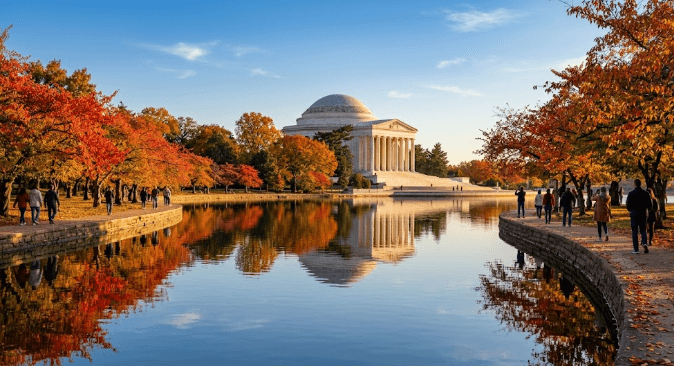
The Tidal Basin is famous for cherry blossoms, but it is also worth visiting during fall.
As trees around the basin change color, their reflections can complement views of the Thomas Jefferson Memorial and the surrounding water. The combination of colorful trees, calm water, and iconic landmarks makes it a beautiful place to experience Washington DC fall foliage.
Destination DC includes the Tidal Basin among its recommended fall photography locations.
The National Park Service also specifically recommends the National Mall and Memorial Parks for autumn experiences, including changing trees around the Tidal Basin and West Potomac Park.
For photographers, look for compositions that combine:
Water + colorful trees + marble architecture
That combination creates one of the most recognizable autumn scenes in Washington, DC. druing the Washington DC fall foliage
7. Capitol Hill: Fall Colors Among Historic Row Houses
Capitol Hill offers another way to experience fall in the city.
Rather than focusing exclusively on large parks, explore the neighborhood’s tree-lined streets and historic homes. Autumn foliage can frame the area’s brick and stone architecture, creating colorful neighborhood photographs and a unique setting for Washington DC fall foliage.
Destination DC specifically highlights Capitol Hill as one of DC’s fall photography locations.
You can combine a Capitol Hill foliage walk with a visit to the U.S. Capitol, Library of Congress, Eastern Market, or nearby restaurants.
For travelers interested in the history and architecture of this part of the city, a Capitol Hill & Library of Congress guided walking tour can also be incorporated into a fall itinerary.
8. Washington National Cathedral: Autumn Landscapes and Architecture
The Washington National Cathedral provides a striking combination of architecture and seasonal scenery.
The cathedral grounds cover nearly 60 acres and include landscaped gardens, mature trees, and the Bishop’s Garden. Destination DC lists the cathedral as one of its recommended locations for experiencing and photographing fall foliage.
This is a particularly good choice if you want your autumn photographs to include more than trees. Gothic architecture, gardens, stonework, and colorful leaves create a distinctive setting for enjoying Washington DC fall foliage.
9. Anacostia Park: Fall Along the River
For something different from the National Mall and Potomac waterfront, consider Anacostia Park.
The National Park Service identifies Anacostia Park as another urban location where visitors can enjoy autumn along the river, with space for walking and biking. Its open riverfront landscape also provides a different perspective on Washington DC fall foliage.
The riverfront setting makes it a good option for travelers looking for open views and a less traditional fall foliage experience.
10. Great Falls: A Fall Day Trip From Washington, DC
If you have more time and want to explore beyond the center of the city, Great Falls offers dramatic scenery along the Potomac River and a memorable setting for Washington DC fall foliage.
The National Park Service includes Great Falls among the Greater Washington region’s recommended autumn destinations, along with Theodore Roosevelt Island and other sites along the George Washington Memorial Parkway.
Here, fall color is paired with the movement and sound of the Potomac River and the dramatic rocky landscape.
Because Great Falls is outside central Washington, DC, plan transportation and allow substantially more time than you would for a National Mall or Georgetown stop.
Best Places for Washington DC Fall Foliage at a Glance
| Location | Best For | Experience |
|---|---|---|
| National Mall | Iconic photographs | Monuments + autumn trees |
| Rock Creek Park | Nature lovers | Forest trails + colorful leaves |
| U.S. National Arboretum | Photography | Gardens + Capitol Columns |
| Georgetown | History & architecture | Historic streets + foliage |
| Theodore Roosevelt Island | Hiking | Woodland trails + Potomac |
| Tidal Basin | Reflections | Water + memorial + foliage |
| Capitol Hill | Neighborhood walks | Row houses + colorful trees |
| Washington National Cathedral | Architecture | Gardens + Gothic architecture |
| Anacostia Park | Waterfront views | River + open spaces |
| Great Falls | Day trips | River + rocks + autumn forest |
Tips for Seeing Fall Foliage in Washington, DC
Plan for Changing Conditions
Fall color is not perfectly predictable. A warm or unusually cold period can affect when individual trees change.
Instead of expecting the entire city to reach peak color at once, plan several locations that offer different types of scenery.
Visit Early in the Day
Morning can be especially rewarding for photographers. You may encounter fewer crowds at popular locations and softer natural light.
The National Mall is particularly appealing early in the day when you want photographs with fewer people.
Wear Comfortable Shoes
Even when you use public transportation or guided transportation, many of Washington’s best fall views require some walking.
Comfortable shoes are essential for places such as Rock Creek Park, Theodore Roosevelt Island, Georgetown, and the National Mall.
Bring Layers
Fall weather in Washington, DC can change considerably during the day. A cool morning can become comfortable in the afternoon, so layers are often more practical than relying on one heavy jacket.
Check Park Conditions Before You Go
Park access, construction, events, weather, and temporary restrictions can change.
Always check the relevant National Park Service or destination website shortly before your visit, especially if a specific location is central to your itinerary.
Don’t Limit Yourself to One Neighborhood
One of the advantages of seeing Washington DC fall foliage is that the scenery is spread throughout the city.
You could start your morning at the National Mall, explore Georgetown in the afternoon, and finish the day around Rock Creek Park or another neighborhood with mature trees.
A Simple One-Day Washington DC Fall Foliage Itinerary
If you only have one day, you can combine several types of autumn scenery.
Morning: National Mall
Start around the Lincoln Memorial and Reflecting Pool, then continue toward the Washington Monument and other memorials.
Take your time photographing the monuments against the changing trees.
Late Morning: Tidal Basin
Continue toward the Tidal Basin for views of the Jefferson Memorial, water, and surrounding foliage.
Afternoon: Georgetown
Head to Georgetown for lunch, historic streets, the C&O Canal, and waterfront scenery.
If you prefer a more structured experience, this is a good time to join a guided Georgetown walking tour.
Late Afternoon: Rock Creek Park
Finish the day among the trees at Rock Creek Park. A short hike or scenic walk provides a completely different atmosphere from the monumental core.
Alternative
If you prefer gardens and plant collections to hiking, substitute the U.S. National Arboretum for Rock Creek Park.
See More of Washington, DC This Fall
Fall is an excellent season to explore Washington, DC because you can combine outdoor scenery with the city’s monuments, neighborhoods, museums, and historic attractions.
If you want to see the major landmarks without spending the entire day walking between them, consider a Washington DC Monuments E-Cart Tour. The tour covers major National Mall landmarks with guided stops for sightseeing and photography.
Another option is the Washington DC Monuments Open-Air Guided Tour, which provides transportation between major monuments while allowing time to get out and explore.
For visitors who prefer evening sightseeing, a Washington DC Monuments Moonlight E-Cart Tour offers a different perspective on the city’s illuminated memorials after a day of exploring autumn scenery.
Frequently Asked Questions About Washington DC Fall Foliage
When does fall foliage usually peak in Washington, DC?
There is no guaranteed peak date for Washington DC fall foliage because weather conditions and different tree species affect the timing of fall color. October and early November are generally useful periods to consider when planning an autumn visit.
Where can I see fall colors without leaving Washington, DC?
You have many options within the city for experiencing Washington DC fall foliage, including the National Mall, Rock Creek Park, U.S. National Arboretum, Georgetown, Theodore Roosevelt Island, Capitol Hill, Washington National Cathedral, Anacostia Park, and the Tidal Basin.
Is Washington, DC good for fall photography?
Yes. The city offers a combination of colorful trees, historic architecture, monuments, memorials, gardens, waterways, and wooded trails. This gives photographers many different types of compositions to explore.
What is the best place for a first-time visitor?
A first-time visitor can combine the National Mall and Tidal Basin with another neighborhood or park to experience Washington DC fall foliage. This provides a mixture of iconic landmarks and seasonal scenery without requiring a separate trip devoted entirely to foliage.
Can I enjoy fall foliage without hiking?
Absolutely. Georgetown, Capitol Hill, the National Mall, Tidal Basin, and Washington National Cathedral all offer opportunities to see autumn colors without requiring a long hike.
Make the Most of Your Autumn Visit
Washington, DC offers many ways to experience Washington DC fall foliage, whether you prefer historic monuments, quiet trails, waterfront views, gardens, or neighborhood walks. Instead of trying to see every location in one day, choose a few areas that match your interests and give yourself time to enjoy them.
With a little flexibility around weather and foliage timing, you can combine colorful autumn scenery with the monuments, history, architecture, and attractions that make Washington, DC such a distinctive destination.
Final Thoughts
Washington, DC is not just a spring destination. When autumn arrives, the capital becomes a colorful combination of historic monuments, wooded parks, waterfronts, gardens, and historic neighborhoods.
For classic photographs, start with the National Mall and Tidal Basin. For a deeper nature experience, explore Rock Creek Park or Theodore Roosevelt Island. For architecture and neighborhood scenery, visit Georgetown, Capitol Hill, or Washington National Cathedral. And for a mix of gardens, trees, and distinctive landmarks, make time for the U.S. National Arboretum.
The best Washington DC fall foliage experience may ultimately be a combination of several locations. Give yourself time to slow down, walk beneath the changing trees, and experience the nation’s capital from a different perspective.
Planning a fall trip to Washington, DC? Explore the city’s monuments, neighborhoods, and history with a local guide through Washington DC Guided Tours.