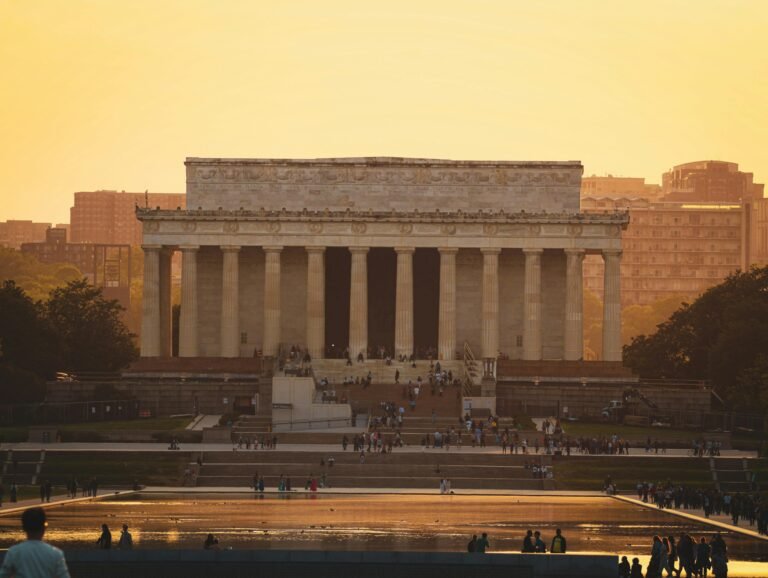
Your first view of Washington, DC can feel surreal. The Capitol dome appears at the end of an avenue, the Washington Monument follows you between buildings, and names from history books become real places. It is exciting—but it can also turn a first trip into one enormous checklist.
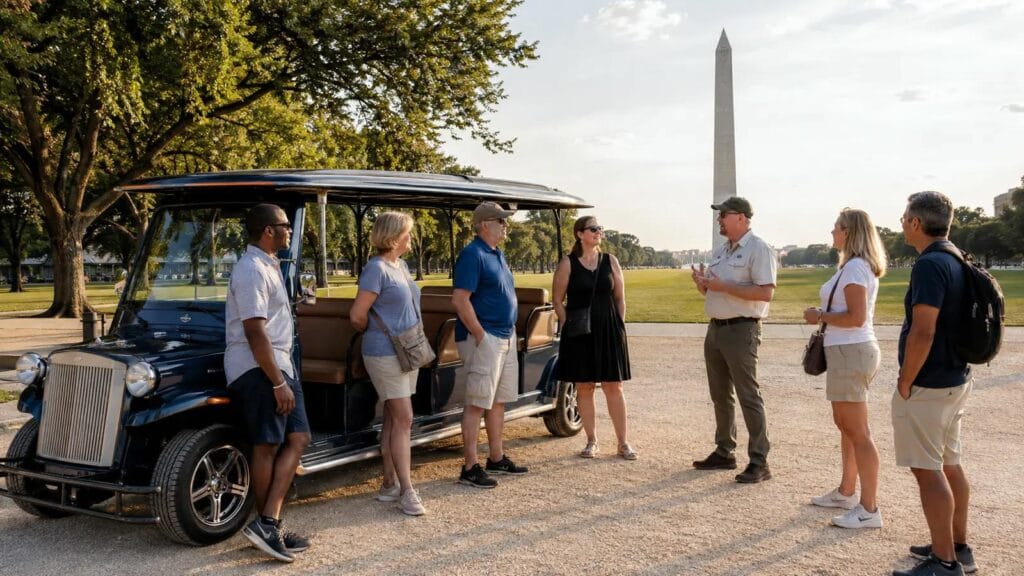
A guided overview helps first-time visitors understand the National Mall before exploring independently.The smartest plan is not to see everything. It is to understand how the city fits together and choose what matters to you. Beginning with a Washington DC guided tour for first-time visitors makes the rest easier: you learn the geography, hear the stories behind the landmarks, and cover the National Mall without spending half a day studying maps.
Quick answer: Start with a two-hour Washington DC guided tour on your first day, add one Smithsonian museum, reserve any timed-entry attractions before you travel, and save either Georgetown or the illuminated memorials for the evening. If you have three days, dedicate one day to the National Mall, one to Capitol Hill and museums, and one to neighborhoods or the waterfront.
Washington DC for First-Time Visitors at a Glance
| Question | Practical answer |
|---|---|
| How long should I stay? | Three days is comfortable; one well-planned day can still cover the essential sights. |
| Where should I begin? | The National Mall, ideally with a Washington DC guided tour early in the trip. |
| What should I reserve? | Washington Monument entry, selected Smithsonian museums, a Capitol tour, and a White House tour if eligible. |
| What is the easiest way to get around? | Combine Metro with walking and a guided E-Cart or open-air tour for the monument loop. |
| What should I avoid? | Overbooking museums, underestimating walking distances, and placing timed entries too close together. |
Why Washington, DC Feels Harder to Plan Than It Looks
On a map, the monuments appear to sit neatly together. On the ground, the distances add up quickly once you connect the Lincoln Memorial, veterans memorials, Washington Monument, Tidal Basin, and White House.
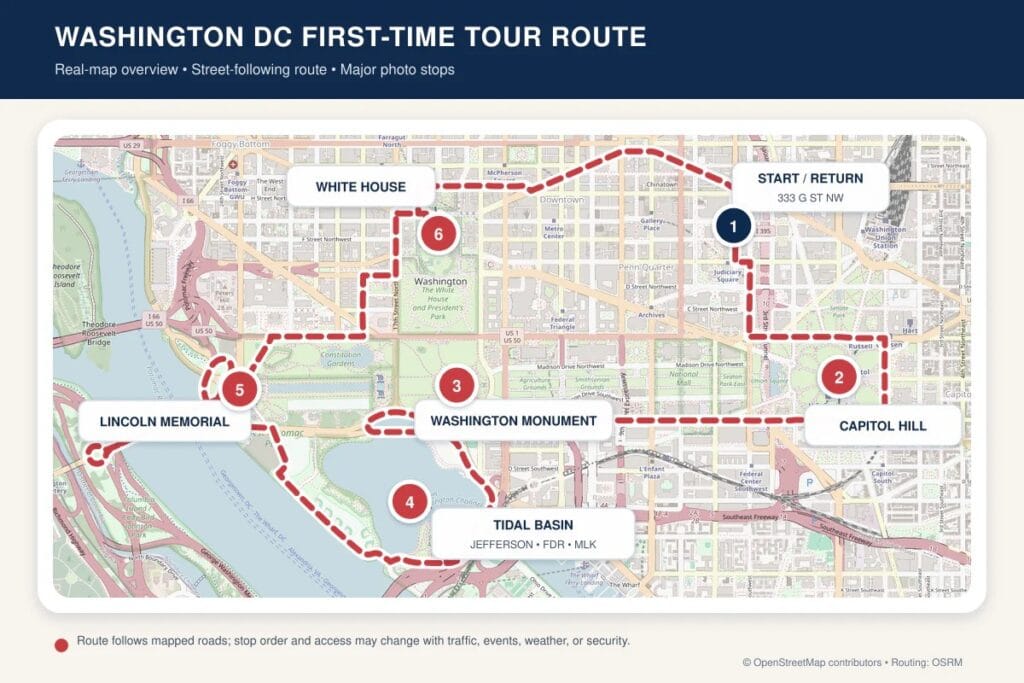
Add security lines, hard-to-find museum entrances, road closures, and timed reservations. DC is manageable, but it rewards a plan built around geographic clusters rather than famous names.
A well-planned Washington DC guided tour gives you a mental map and quickly reveals where you want to return. Compare the current options on our Washington DC tours page.
Which Washington DC Guided Tour Is Best for Your First Visit?
Choosing the right Washington DC guided tour depends on how much you want to walk, who is traveling with you, and whether you prefer daylight detail or nighttime atmosphere.

| Tour style | Best for | What makes it useful on a first trip |
| Small-group E-Cart tour | Couples, families, seniors, and travelers short on time | Open views, 6+ monument stops, live storytelling, and less walking between distant memorials |
| Open-Air Cruiser tour | Visitors who want an efficient, comfortable overview | Covers the core National Mall landmarks with planned opportunities to step out and take photos |
| Moonlight E-Cart tour | Photographers, couples, summer visitors, and full daytime itineraries | Cooler evenings, illuminated memorials, and a quieter atmosphere after sunset |
| Capitol Hill and Library of Congress tour | Travelers interested in government, architecture, and political history | A focused walking experience that goes deeper than a general monument overview |
For a first morning, a daytime Washington DC guided tour by E-Cart or Open-Air Cruiser provides an easy orientation. If museums fill your days, a moonlight tour adds the monuments without competing with opening hours. Routes may change because of traffic, events, weather, demonstrations, or security restrictions—part of visiting a working capital.
How to Choose a Tour That Matches Your Travel Style
Every Washington DC guided tour can begin to sound similar after you have opened five browser tabs. Instead of comparing every stop line by line, start with the experience you want to have.
If your priority is seeing the essential monuments efficiently, choose a broad National Mall tour early in the trip. The best Washington DC guided tour for this goal connects landmarks that are inconvenient to cover on foot in a short period. Look at the number of actual stops, not only the number of attractions listed. Seeing a memorial from the road is different from having time to step out, walk closer, and take photographs.
If you are traveling with children or multiple generations, pace matters more than squeezing in one extra landmark. A small-group Washington DC guided tour can keep the ride engaging while planned stops give everyone a chance to move around. A two-hour experience is often easier to fit between meals, museum reservations, and tired feet than a half-day tour. Parents should still bring water, sun protection, and a small snack because traffic or temporary closures can lengthen a route.
For history-focused travelers, a general Washington DC guided tour is a strong introduction, but it may not satisfy every question about Congress, presidential history, or architecture. Pair the overview with the Capitol Hill and Library of Congress experience on another day. The first tour explains the city’s physical and symbolic layout; the second allows time for one part of that story to become more detailed.
For photographers and couples, the decision is usually about light. A daytime Washington DC guided tour provides clearer architectural detail, while blue hour and nighttime illumination create more dramatic images. A moonlight tour also leaves museum hours untouched, which is useful when daytime plans are already crowded.
Finally, think honestly about mobility. A Washington DC guided tour reduces the long distances between monuments, but most options still include getting in and out of the vehicle and short walks at selected stops. If anyone in your party uses a wheelchair, walker, or other mobility aid, contact the operator before booking so vehicle access, storage, and the expected walking can be confirmed.
The Landmarks Every Washington DC Guided Tour Should Prioritize
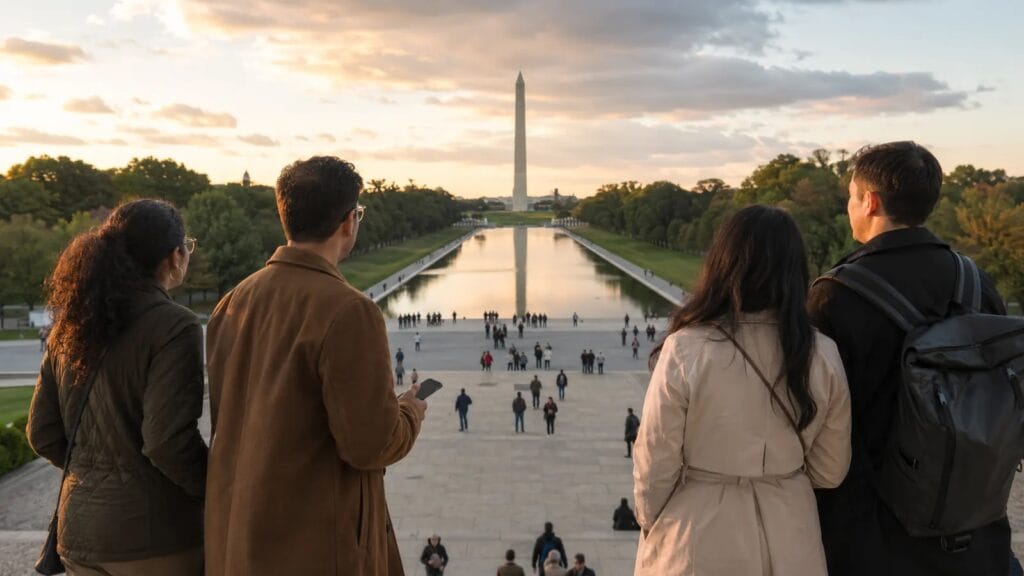
The National Mall is the natural starting point and is open 24 hours, although individual attractions have separate schedules. A useful Washington DC guided tour should connect the major landmarks without making every stop feel rushed. Check the National Park Service’s National Mall guide for current conditions.
Lincoln Memorial and the western memorials
A Washington DC guided tour should allow enough time here to appreciate the view rather than treating the memorial as a quick photo stop. Nearby, the Vietnam and Korean War Veterans memorials offer very different forms of remembrance; the World War II Memorial completes this western cluster.
Washington Monument
If your Washington DC guided tour stops near the monument, keep the separate timed-entry requirement in mind. Entry requires a timed ticket; the National Park Service explains official availability on its Washington Monument ticket page.
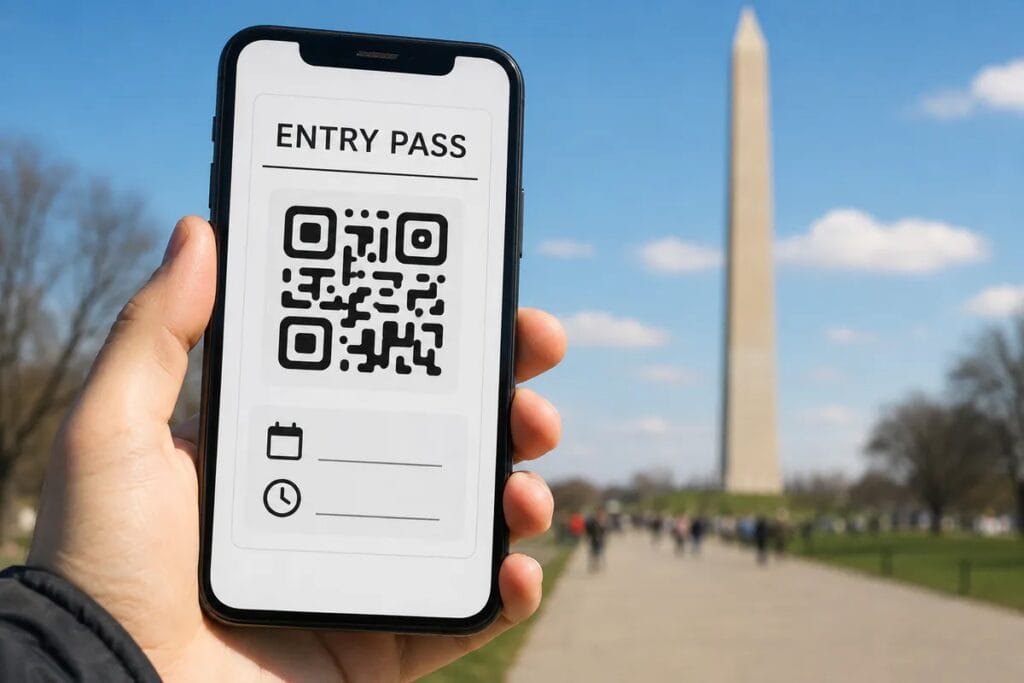
Our Washington Monument reserved-entry experience includes concierge handling and a digital guidebook. We email the official QR code one day before the visit. Admission remains controlled by the National Park Service and Recreation.gov; our price covers the independent reservation service and included experience.
For a step-by-step explanation of release times, arrival, security, and what you see upstairs, read our full Washington Monument tickets guide.
Tidal Basin memorials
The Jefferson, FDR, and Martin Luther King Jr. memorials form another cluster around the Tidal Basin. A Washington DC guided tour that reaches this area can save valuable energy because it sits beyond the central monument loop. The basin is especially beautiful near sunrise or sunset.
White House and U.S. Capitol
Exterior views of both buildings fit naturally into a Washington DC guided tour; interior visits require separate planning. Free Capitol tours run Monday through Saturday, with reservations recommended through the U.S. Capitol Visitor Center. White House tour requests must be submitted through a Member of Congress, generally 7–90 days ahead. Confirm current instructions on the official White House visit page.
Choose One Museum, Not Five
After your Washington DC guided tour, choose one Smithsonian museum that genuinely matches your interests and give it enough time. Trying to “stop by” several museums usually creates a rushed afternoon.
- Air and Space: aviation, spaceflight, and families; free timed-entry passes are currently required at the DC location.
- Natural History: dinosaurs, gems, and an easy choice for mixed-age groups.
- American History: culture, innovation, and everyday American life.
- African American History and Culture: powerful, layered, and worth planning in advance.
- National Gallery of Art: a change of pace for art and architecture lovers.
Admission is generally free, but several locations use passes. Check the Smithsonian museum directory rather than assuming “free” means “walk in anytime.”
What Should You Reserve Before Arriving in Washington, DC?
The easiest way to build a first-time itinerary is to place the least flexible reservations first. If your Washington DC guided tour has a fixed departure time, treat it like any other timed reservation and arrange flexible attractions around it.
Start with the experiences controlled by government or museum availability. Washington Monument tickets, a White House request, a Capitol tour, and timed Smithsonian entry should be considered before restaurant reservations or neighborhood plans. The official systems and operating agencies control these entries, and availability can change during school breaks, spring travel, summer weekends, holidays, and major events.
A Washington DC guided tour does not automatically include tower entry unless the product description specifically says so. Decide whether you want to handle that process directly or use the concierge option described above. In either case, leave time to reach the screening area and complete security; a ticket time is not the moment to arrive at the grounds.
Capitol tours are free, and reservations are recommended. The experience takes place inside a working government complex, so security procedures and official business can affect access. The Library of Congress is nearby, but do not assume the two entrances, checks, and visits can be completed instantly. Treat Capitol Hill as a half-day cluster rather than a quick stop between distant attractions.
White House public tours require the most advance planning because requests go through a Member of Congress and approval is not guaranteed. If an interior visit matters to you, submit the request within the official window and avoid building the entire trip around it until confirmation arrives. An exterior photo stop can easily remain part of a guided sightseeing day regardless.
Museum planning is more forgiving, but still worth checking. Air and Space and the National Museum of African American History and Culture may use timed entry, while other Smithsonian museums often allow walk-in admission. Policies can change, so confirm them on the museum’s own page shortly before the trip.
A useful rule is to schedule no more than two fixed-time commitments in one day. Leave at least 60–90 minutes between attractions in different areas when security, walking, Metro, or road closures are involved. That breathing room is not wasted time; it is what keeps one delayed entry from disrupting the rest of the day.
A Realistic Washington DC Itinerary for First-Time Visitors
If you have one day
Begin with a morning Washington DC guided tour, then have lunch and spend two to three hours in one Smithsonian museum. Use late afternoon for a timed Washington Monument visit or Capitol Hill. Finish at The Wharf or among the memorials after dark.
A monument tour, one museum, one reserved attraction, and an evening experience are enough.
If you have two days
Use day one for the Mall, memorials, and a museum. On day two, book a Capitol tour, visit the Library of Congress, and explore Eastern Market or Capitol Hill. If your first Washington DC guided tour was during daylight, consider returning to the monuments after sunset.
If you have three days
Use day three beyond the federal core. Georgetown offers historic streets, the C&O Canal, shopping, and waterfront dining; a historic Georgetown walking tour reveals the stories behind its brick facades. This neighborhood day balances the monument-heavy pace of a Washington DC guided tour. Alternatives include The Wharf, Dupont Circle, the National Zoo, or a Potomac cruise.
For more neighborhoods, museums, and seasonal ideas, use our local guide to things to do in Washington DC.
Visiting With Children, Seniors, or Limited Mobility
Washington is rewarding for mixed-age groups because the same day can combine outdoor monuments, interactive museums, and short transportation segments. The challenge is energy management.
With children, alternate high-attention experiences with open space. A narrated tour in the morning, lunch, and one interactive museum usually works better than three museums in succession. Natural History and Air and Space are popular family choices, but even an exciting museum can become tiring after several hours. Let children choose one exhibit they genuinely want to see instead of marching through every floor.
For seniors and travelers who prefer less walking, use guided transportation for the monument loop and save walking for the places where it adds the most value. The Lincoln Memorial steps, long museum corridors, and distances around the Tidal Basin can all affect the day differently. Seating, elevators, accessible entrances, and temporary construction conditions vary by site, so check the official accessibility page for any attraction that is essential to your plans.
Summer deserves particular care. Heat and humidity can feel stronger on the open lawns and paved paths of the National Mall than the temperature suggests. Put monuments in the morning or evening, use air-conditioned museums during the hottest part of the day, and schedule water and restroom breaks before anyone urgently needs one. In colder months, the opposite pattern can work: museums early, followed by outdoor memorials when the afternoon is warmer.
Do not describe a day as “light walking” simply because a vehicle is involved. Include the walk from the hotel or Metro, security lines, museum interiors, photo stops, and the return journey. A realistic description helps the whole group choose the right pace without anyone feeling that they are slowing the trip down.
How to Get Around Without Losing Half Your Day
Metro is useful between downtown, Capitol Hill, museums, and neighborhoods. Use a SmarTrip card or contactless payment where supported; the WMATA visitor guide lists current fares and passes.
Walking is still part of every DC day. Wear trusted shoes, carry water, and check the entrance—not just the building address. Road closures can also move rideshare pickup points.
For many first-timers, the winning combination is Metro for long transfers, a Washington DC guided tour for the monument loop, and walking within one geographic cluster.
Where to Eat, Rest, and Reset During a National Mall Day
Food and rest breaks are not glamorous itinerary items, but they often determine whether the afternoon remains enjoyable. The western memorials have fewer convenient indoor options than the museum and Capitol areas, so do not wait until everyone is hungry to decide where to eat.
Smithsonian museum cafés can be practical when a museum already appears in your plan. Penn Quarter offers more restaurant choice north of the Mall, while The Wharf works well when you want to turn dinner into an evening waterfront stop. Capitol Hill and Eastern Market are better paired with a Capitol-focused day than with a rushed detour from the Lincoln Memorial.
Carry water, but review security restrictions before packing a large bag for government buildings. Restrooms are available in museums and at selected locations around the Mall, yet they may not sit directly beside the monument where you need them. Families and groups should agree on a meeting point before separating inside a crowded museum or memorial area.
One longer sit-down break is often more useful than several rushed snack stops. It also creates a natural buffer if a morning reservation runs late. After lunch, choose one meaningful afternoon attraction rather than trying to recover every item that slipped from the schedule.
The Best Time to Visit Washington, DC
Spring brings cherry blossoms and peak crowds. Summer has long days; schedule outdoor sightseeing early or after sunset. Fall is excellent for walking, while winter is quieter but offers less daylight.
Match the schedule to the season: a July visitor should not copy a November walking plan, and cherry-blossom dates need more buffer for crowds.
First-Time Mistakes That Are Easy to Avoid
- Do not place a Capitol tour, museum pass, and Monument entry back-to-back without travel and security time.
- Do not assume every Smithsonian museum has the same entry policy.
- Do not treat the entire Mall as one casual walk.
- Do not save ticket decisions until arrival in peak periods.
- Do not spend the whole trip around federal landmarks; add one neighborhood afternoon.
- Keep one flexible museum or neighborhood option for closures or weather.
For more practical lessons, see our guide to Washington DC travel mistakes first-time visitors should avoid.

Frequently Asked Questions
Is a Washington DC guided tour worth it for first-time visitors?
Yes, especially on day one or with limited time. A tour connects distant monuments, explains what you see, and creates a mental map. Choose one with real stops rather than only drive-by views.
How many days do I need for my first trip to Washington, DC?
Three days is comfortable. One day can cover a monument overview, one museum, and one reserved attraction. Day two adds Capitol Hill; day three creates room for Georgetown, The Wharf, the Zoo, or another neighborhood.
What is the best Washington DC guided tour for first-time visitors?
A two-hour E-Cart or open-air monuments tour is a versatile introduction with less walking and planned stops. Choose moonlight when museums fill your day or you want cooler weather and illuminated views.
Are the monuments and Smithsonian museums free?
Outdoor Mall memorials are free. Smithsonian museums generally do not charge admission, but some require free passes. The Washington Monument uses timed tickets, and advance reservations carry an official service fee.
Do I need a car in Washington, DC?
Most first-time visitors do not. Metro, walking, guided sightseeing, and occasional rideshare trips are usually easier than finding parking near major attractions.
Should I tour the monuments during the day or at night?
Daylight is best for detail and museum pairings; night is atmospheric, cooler, and photogenic. If possible, see one major memorial both ways.
Make Your First Washington, DC Day Feel Effortless
The best first visit is not the longest checklist. It is the one in which the city begins to make sense—and you still have enough energy to enjoy dinner.
Start with a Washington DC guided tour for first-time visitors, choose one museum, and allow real travel time. Then compare our guided Washington DC tours to find your pace.